How Do You Keep the Orthodox Fast Without Wearing Yourself Down?
The Nativity Fast begins November 15. If you've kept it before and, by the second week, you were tired, hungry an hour after eating, and a little short with your family, the problem usually isn't your faith. It's your plate, your sleep, and the story you tell yourself once meat, cheese, and eggs come off the table.
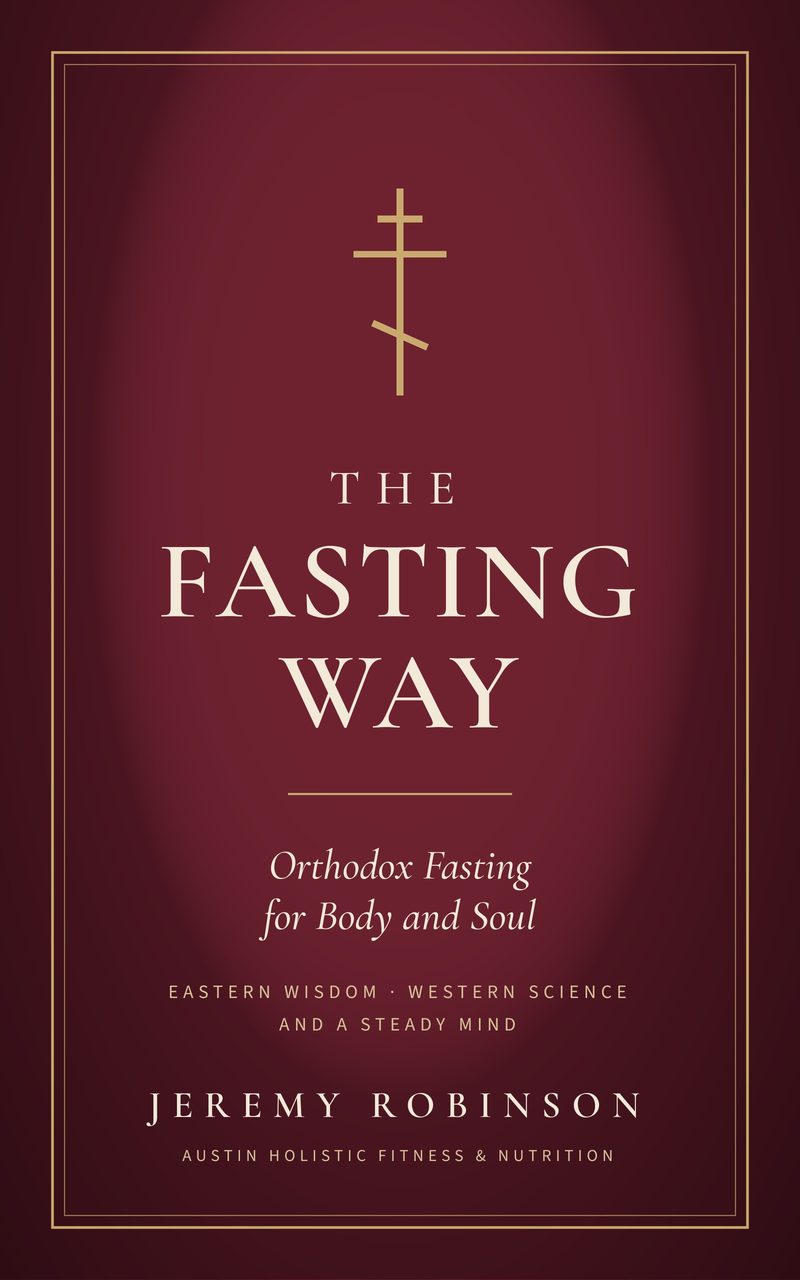
I wrote a free book for that moment: The Fasting Way: Orthodox Fasting for Body and Soul. Download it, and the two-page Quick Guide, at austinholisticfitness.com/fasting-way. It's free to share with your church.
I'm Jeremy Robinson, a holistic coach. I've been coaching since 2001, and I opened Austin Holistic Fitness and Nutrition in 2015. I'm a coach, not a priest. I don't speak for the Church, and nothing here replaces the guidance of your own priest or spiritual father.
The fast is not a diet
The Orthodox fast is a spiritual practice the Church has kept for nearly two thousand years. Its goal is not a smaller waistline. Its goal is a softer heart, a clearer mind, and a life turned more fully toward God and toward other people. If your body feels better along the way, that is a gift, not the point.
The body and the soul are not strangers. When you are running on crackers and coffee, it is harder to be patient. When you have slept five hours, it is harder to pray. Our relationship to food is our relationship to our bodies. Taking care of the body during a fast is not a distraction from the spiritual work. It can make room for it.
How strictly you fast is a conversation for you and your priest. Follow your parish calendar and the rule you've been given.
The bread and pasta trap
The fast begins, and a person takes out the meat, the cheese, and the eggs. What fills the empty space is bread, pasta, crackers, and chips. Those refined starches digest quickly, so you're hungry again sooner.
The way out is not to fear carbohydrates. Beans, lentils, potatoes, oats, fruit, and whole grains are wonderful fasting foods. The way out is pairing. When you eat starch with protein and fiber, and with a little fat on oil days, the meal digests more slowly. You stay full longer.
After a meal, notice how you feel two hours later. Calm and not thinking about food? Good pairing. Hungry, tired, or cranky? The meal was probably heavy on refined starch. Adjust the next meal, not your whole life.
Build the plate
Picture your plate in four parts:
- Half the plate: vegetables. Fresh, frozen, roasted, steamed, or in soup.
- A quarter of the plate: protein. Beans, lentils, chickpeas, tofu, tempeh, edamame, or shellfish, if your rule allows it.
- A quarter of the plate: smart starch. Potatoes, oats, brown rice, quinoa, whole-grain bread, or fruit.
- On oil days: a little healthy fat. Olive oil, olives, avocado, nuts, or tahini. How oil is kept varies, so follow your priest.
Build every meal around the protein. Where shellfish is permitted, keep it simple: frozen shrimp or canned clams, not a seafood feast. It was traditionally cheap food of the poor.
Cook a pot of beans or lentils twice a week. Make one big soup on Sunday. Wash and chop vegetables in advance, and keep emergency protein on hand, like canned beans, frozen shrimp, or shelf-stable tofu.
The Nativity Fast runs November 15 to December 24. It is gentler at the start, with fish, oil, and wine allowed on many days, and grows stricter as Christmas approaches and on Wednesdays and Fridays.
When you slip, tell God honestly, return to the fast at the next meal, and keep going. One slip does not undo a season.
Where I was almost right, and then corrected
I sent an early draft to a few Orthodox priests and asked them to tell me what I'd gotten wrong. An Orthodox priest here in Austin who reviewed it sent me clear, gentle notes. I'm showing the corrections in the book, because I think it's good for people to see where I was almost right and then corrected.
I had written the strictest oil rule I knew as if it were the usual one. It isn't, not everywhere. I had turned a word about wine into a rule about every kind of drink, and that went further than the texts. I listed shellfish, but I hadn't said clearly enough why we should keep them simple. And I needed to say that the fasting guidelines assume good health, and that a gentler rule for health is normal, not a lesser fast.
Follow your priest on all of it. If later clergy reviews bring more corrections, I'll add them the same way.
Please read this before you change how you eat
The fasting guidelines assume good health. If you have a medical condition, are pregnant or nursing, have diabetes, have allergies, take medication for blood pressure, or have a history of an eating disorder, talk to your doctor and your priest before changing how you eat. A rule given in obedience is a faithful fast. If you feel faint or unwell, stop and eat, and seek medical care if symptoms do not quickly improve.
Game plan
- Talk first. Ask your priest about your rule for the Nativity Fast. If any of the health notes above apply to you, talk with your doctor too.
- Build the plate. At your next fasting meal, make half the plate vegetables, a quarter protein, and a quarter smart starch.
- Cook before hunger arrives. This weekend, make a pot of lentils or a big soup, and put washed fruit and chopped vegetables where you'll see them.
- Download the book and share it. Get The Fasting Way and the two-page Quick Guide, free, at austinholisticfitness.com/fasting-way. It's free to share with your church.
May your fast be blessed, and may it lead you to a joyful feast.